Composite vs. Aluminium Sliding Doors

Author: John Collins - Managing Director
Share:


When choosing sliding patio doors for your home, composite and aluminium options often top the bill. Both offer excellent performance, but they differ in design, lifespan, cost, and long-term value.
This guide compares composite sliding doors and aluminium sliding doors to help you decide which material best suits your home, from traditional or modern installations to long-term performance and maintenance.
In this guide:
Compare aluminium and composite sliding doors to find the best option for you
Find out why composite sliding doors might not be the best choice
Discover whether aluminium sliding doors are the best choice for customisation
For a better investment, consider the following points
We answer some common queries
Are Aluminium Sliding Doors Better Than Composite Doors?
|
Feature |
Aluminium Sliding Doors |
Composite Sliding Doors |
|
Durability |
Very high; resistant to warping, corrosion and weathering |
Good; resistant to rot and decay but may fade or warp over time depending on materials used |
|
Maintenance |
Very low; occasional cleaning |
Low; wipe-down cleaning, but external skins may require attention |
|
Frame Slimness |
Slim frames allow larger glass area |
Bulkier frames reduce glass proportion |
|
Aesthetics |
Modern, sleek, many colours/finishes |
Traditional or contemporary, woodgrain and classic styles |
|
Thermal Performanc |
Strong with thermal breaks, can match composite levels |
Excellent; typically thermally efficient due to core materials |
|
Weight & Ease of Use |
Lightweight frames operate easily |
May be heavier at larger sizes |
|
Lifespan |
Very long (often decades) |
Long, though sometimes shorter than aluminium |
|
Cost |
Often higher upfront |
Usually less expensive than aluminium |
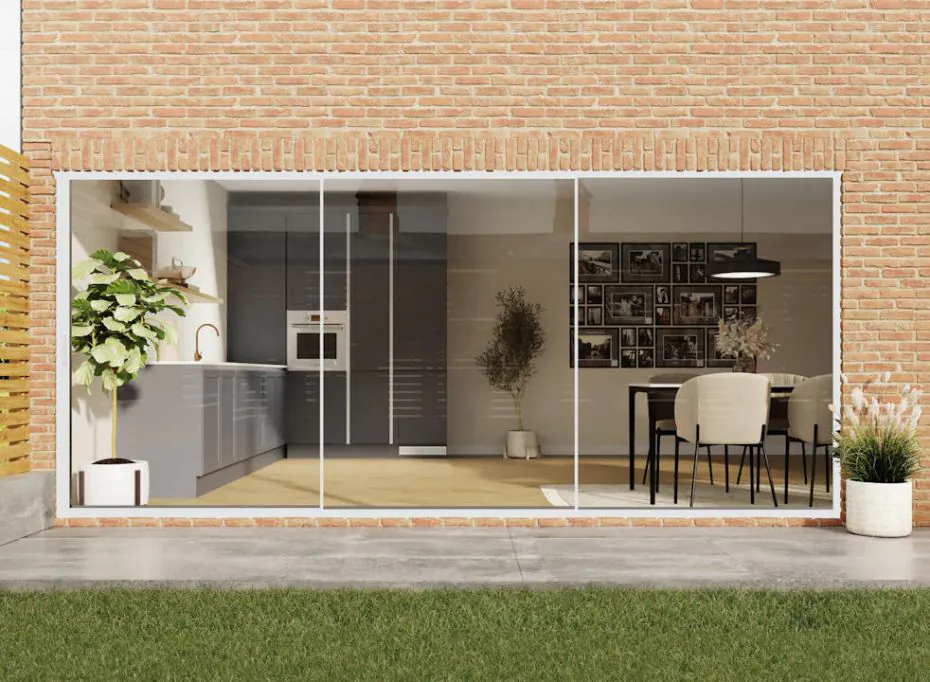
Our slimmest frames are available in our COR Vision aluminium sliding door range, available in colours such as black, grey and white.
What Are the Disadvantages of a Composite Sliding Door?
Bulkier frame profiles: composite sliding doors typically have thicker frames than aluminium, which can reduce the overall glass area and limit uninterrupted views.
Less suited to large openings: due to their weight and structural limitations, composite doors are not always ideal for very wide spans or floor-to-ceiling glazing.
Heavier panels: composite doors can be heavier than aluminium alternatives, which may affect ease of operation, particularly on larger sliding panels.
Potential for colour fading: some composite finishes, especially darker colours, may fade over time with prolonged exposure to direct sunlight.
Risk of movement over time: although designed for stability, composite materials can still experience minor warping or bowing during extreme temperature changes.
Limited contemporary styling: composite doors generally cannot achieve the ultra-slim sightlines and minimalist appearance associated with modern aluminium systems.
Longer manufacturing lead times: the layered construction of composite doors can result in longer production and delivery times.
More complex repairs: if damage occurs, composite doors can be harder to repair due to their multi-material construction, sometimes requiring full panel replacement.
View our extensive collection of aluminium sliding patio doors, with ultra-slim frames.
Are Aluminium Sliding Doors More Customisable Than Composite Options?
When it comes to customisation, both materials have plenty to offer, but the types of choices you get tend to differ.
Aluminium Sliding Doors
Aluminium is intrinsically suited to modern, sleek designs. Because the material is strong yet lightweight, manufacturers can create slim frames with expansive glazing that maximise natural light and views. Aluminium also excels in its range of finishes:
-
Wide colour ranges, including RAL colours.
-
Matte, satin or metallic finishes to suit contemporary and modern homes.
-
Optional design features and hardware that enhance both look and performance.
These options make aluminium sliding doors very adaptable to architectural projects that emphasise light, minimal sightlines, and modern styling.
Composite Sliding Doors
Composite doors often offer customisation in terms of finishes and traditional aesthetic options:
-
Woodgrain effects and classic colour palettes.
-
Decorative panelling and traditional design features are in some systems.
However, composite systems typically have bulkier profiles, which can limit the extent to which they deliver large glazed expanses.
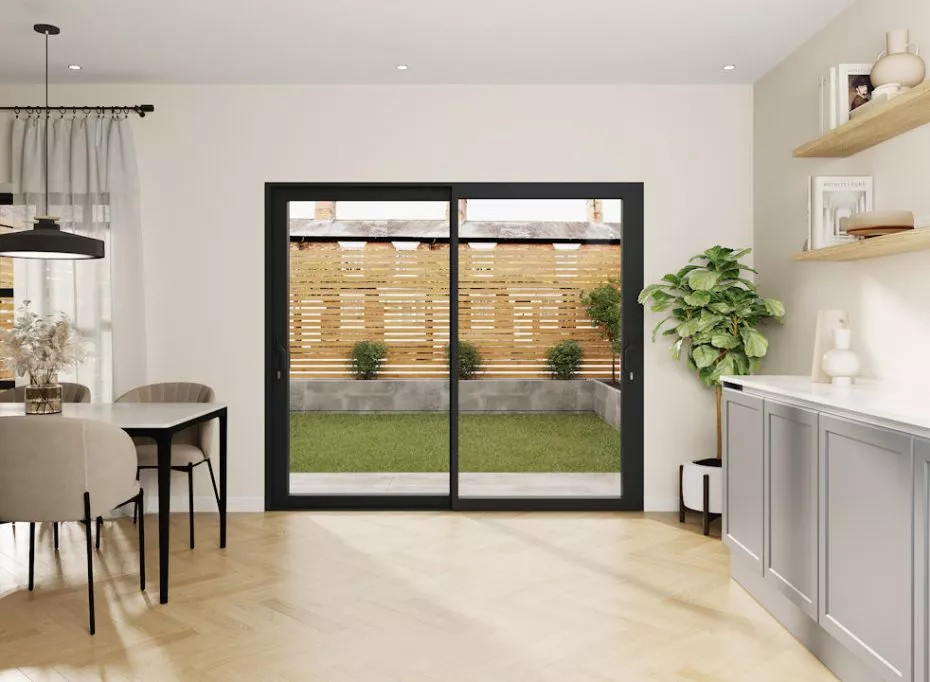
Our Supreme inline aluminium sliding doors are a practical choice, running smoothly on a simple track for ease of access. View our full collection of Supreme aluminium patio doors here.
-
Initial cost: composite sliding doors are usually more affordable upfront, while aluminium sliding doors tend to have a higher initial purchase and installation cost.
-
Lifespan: aluminium sliding doors generally last longer, often several decades, due to their resistance to corrosion and weather damage; composite doors have a good lifespan but may not match aluminium over the long term.
-
Maintenance requirements: both options are low maintenance compared to timber, but aluminium requires less long-term attention as it does not fade or degrade as easily as composite materials.
-
Performance over time: aluminium maintains its structural integrity and smooth operation for longer, especially on large or frequently used sliding panels.
-
Design longevity: aluminium’s slim frames and modern appearance tend to age better with contemporary architecture, whereas composite styles may feel dated sooner in design-led homes.
-
Energy efficiency: both door types offer excellent thermal performance when paired with modern glazing.
-
Repair and replacement costs: aluminium components are often easier to service or replace individually, while composite doors may require full panel replacement if damaged.
-
Resale appeal: aluminium sliding doors can add greater appeal and perceived value to modern homes, potentially supporting higher resale value.
-
Overall value: composite doors offer strong value for budget-conscious homeowners, but aluminium sliding doors often deliver better long-term value due to longevity, durability, and minimal ongoing costs.
Overall, aluminium sliding doors are the better choice, offering better value for money and available in a wide variety of finishes with other customisable options
Frequently Asked Questions
Are Composite Sliding Doors as Strong as Aluminium Ones?
Both materials are strong and secure, but aluminium is generally stronger and more rigid, permitting larger panel sizes and slimmer frames without compromising structural integrity.
Do Composite Doors Offer Good Thermal Efficiency?
Yes. Composite doors typically provide excellent insulation thanks to multi-layered cores and tight seals, often matching or exceeding standard requirements.
Are Aluminium Sliding Doors More Expensive Than Composite?
Yes, in most cases, aluminium sliding doors cost more upfront, particularly for bespoke or large systems.
Do Both Materials Require Much Maintenance?
No, both aluminium and composite sliding doors are low maintenance, usually requiring just regular cleaning with mild soapy water.
Which Material is Better for Large Patio Openings?
Aluminium is generally better suited to large openings and expansive glass panels due to its strength and slim sightlines.
Overall, aluminium sliding doors are the better choice, offering better value for money and available in a wide variety of finishes with other customisable options.
Related Content
About John Collins
John has built Vufold into a unique online door and window company and has spent 20 years bringing innovative products and designs to fruition, recognising niches in the market and placing them in the likes of Wickes and Travis Perkins, he started Vufold in order to sell them directly. John founded Vufold and has amassed a wealth of experience in product design and development, and in particular timber-based products
Read more about John Collins